The origins of scripophily
Where does the name "scripophily" come from?
Numismatics, already rich of many specialties (coins, tokens, medals, paper money ...), has expanded in the early 1980s with a new scope: the scripophily, which term is accepted from 1985 by the Petit Larousse French dictionary.
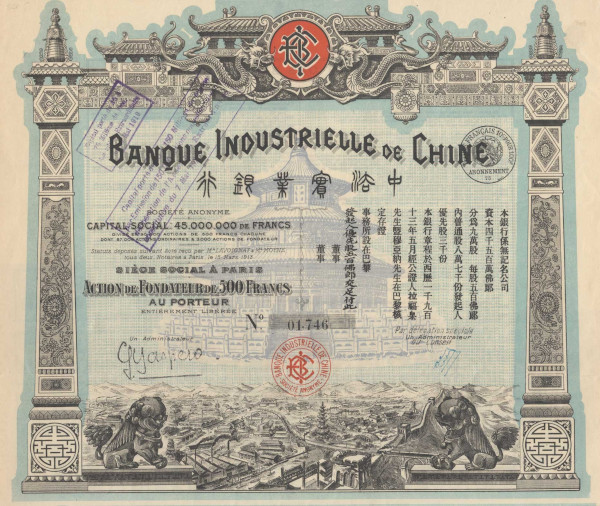
Scripophily is the collection of old stock and bond certificates, which are no longer on the stock market, with the exception of some foreign loans (Chinese, Argentine, Belgian, etc.). Either the bonds were dematerialized or the companies went bankrupt. In France, the dematerialization took place in 1984.
The scripophily is interested in all forms of old financial stocks, which were once listed on a financial market. These documents are engraved and numbered. Of the six million listed shares, some of them illustrated, brings a true testimonial to the activity of the issuing company, and in all fields: the arts, science, major works and cinemas, etc.
Thus scripophily allows fans to trace, thanks to these documents, the unrecognized wealth of one of the economic aspects of our historical heritage, industrial and financial.
Comments
Leave your comment